
4.7* BASED ON 1300+ REVIEWS
4.7* BASED ON 1300+ REVIEWS
 £
Fulham
0207 610 1110
NHS Dentist
£
Fulham
0207 610 1110
NHS Dentist
"I've been going to this practice for a few years now, and it’s amazing.
I’m a very nervous patient, but all the people there are sensitive and efficient - and the dentists are fantastic. Have recommended it to friends who also love it."
Bruxism is the medical term for grinding, clenching, or gnashing the teeth. It often occurs unconsciously, most commonly during sleep, although some people also clench their teeth during the day, especially when stressed or concentrating. While occasional grinding may not cause serious harm, frequent or long-term bruxism can lead to significant dental problems.
The pressure created when grinding teeth is much greater than during normal chewing. Over time, this can wear down the enamel—the protective outer layer of the teeth—making them appear flatter, shorter, or more sensitive. In more severe cases, bruxism can lead to chipped teeth, cracked fillings, or even fractures. The condition can also strain the jaw muscles and joints, causing jaw pain, facial tension, and headaches, particularly in the morning.
Bruxism is often linked to stress or anxiety, but it may also be associated with sleep problems, certain medications, or issues with the way the teeth come together. Because it usually happens during sleep, many people are unaware they grind their teeth until a dentist notices signs of wear.
Treatment focuses on protecting the teeth and reducing the force of grinding. Dentists commonly recommend a custom night guard to be worn during sleep to prevent damage. Managing stress, improving sleep habits, and reducing stimulants such as caffeine can also help. In some cases, Botox can be used to relax the powerful jaw muscles responsible for grinding. By reducing the strength of these muscles, Botox can significantly decrease clenching and protect the teeth from further damage.
Early diagnosis is important, as addressing bruxism can help prevent long-term damage to the teeth and jaw.
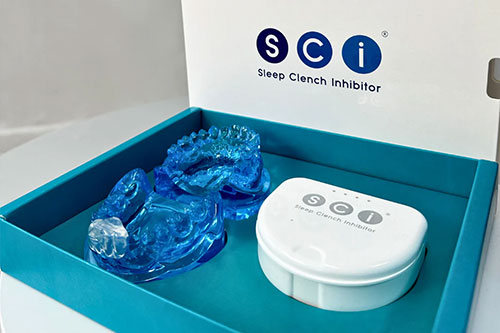
There are a number of potential treatments for Bruxism, we offer the Sleep Clenching Inhibitor- SCI by S4S that helps prevent clenching at night.

Simple snoring is the noise resulting from a partial closure of the airway during sleep. It is estimated that over 45% of the population snores, leading to disrupted sleep for the sufferer and their bed partner.
Ranging from 50-100 decibels, the equivalent of a pneumatic drill, snoring can lead to relationship issues, daytime sleepiness, increased stress and depression if left untreated. Less often, snoring can also take place as part of a more serious condition, obstructive sleep apnoea (OSA), which is potentially life-threatening.
Patients suffering from snoring often go untreated, as they are too embarrassed to seek help for their problem. Those that do try to get help often consult their GP for a solution, where certain lifestyle changes may be suggested including weight loss, different sleeping positions, staying well hydrated and avoiding alcohol.
What many patients are unaware of is that dentists can provide a clinically proven solution to treat their snoring with a Mandibular Advancement Splint. The Sleepwell MAS is the most clinically proven for the treatment of snoring and mild to moderate OSA.
Call today to book your initial consultation or to find out more!

Fields with (*) are required.
Please contact us via this website or email without disclosing confidential information.
| Monday: | 8:00 am to 8:00 pm |
| Tuesday: | 8:00 am to 8:00 pm |
| Wednesday: | 8:00 am to 8:00 pm |
| Thursday: | 8:00 am to 8:00 pm |
| Friday: | 8:00 am to 5:00 pm |
| Saturday: | 8:00 am to 12:00 pm |
| Sunday: | Closed |
| Phone lines are closed 12pm to 1pm for lunch | |